at the opening
Storm Over the Lake
The play opens beside [Lake of Lucerne](entity:location-recall-location-2cebe1ed8651), where a fisherman, a herdsman, and a hunter read signs of an approaching storm in the animals, the wind, and the clouds. Their songs and talk establish a land whose people live close to the rhythms and dangers of the mountains.
shortly afterward
Baumgarten’s Flight
[Conrad Baumgarten](entity:character-recall-character-conrad-baumgarten-b7d479c623de) arrives breathless, pursued by the governor’s horsemen. He explains that he killed the seneschal Wolfshot after the official entered his home and attempted to violate his wife.
during the rising storm
A Boatman’s Refusal
As thunder and wind make the lake dangerous, the fisherman refuses to take Baumgarten across, fearing for his own life and family. Baumgarten faces capture with safety almost in sight, and the delay makes the choice urgent.
moments later
Tell Rescues Baumgarten
[Wilhelm Tell](entity:character-recall-character-wilhelm-tell-1631a4b5f973) arrives and urges the boatman to help, arguing that the fugitive should not fall into the governor’s hands. When the fisherman will not risk the crossing, Tell takes the boat himself and braves the storm to carry Baumgarten to safety.
as Tell reaches the far shore
The Governor’s Retaliation
The pursuing horsemen arrive too late to seize Baumgarten. They punish the people who helped him by driving off their herds and threatening their homes, turning one man’s escape into another public example of the governors’ power.
later that day
Gessler Threatens Stauffacher
At [Steinen](entity:location-recall-location-fdc729233126), [Werner Stauffacher](entity:character-recall-character-werner-stauffacher-52875fcb6d24) tells [Gertrude](entity:character-recall-character-gertrude-e35319e46081) how [Hermann Gessler](entity:character-recall-character-hermann-gessler-0529a7785215) stopped before their newly built house and threatened to curb the freedom of ordinary people to build as they pleased. [Stauffacher](entity:character-recall-character-stauffacher-21ead3bf4be8) fears that his secure-looking home stands on ground made unstable by arbitrary rule.
the same conversation
Gertrude Urges Resistance
[Gertrude](entity:character-recall-character-gertrude-e35319e46081) argues that Gessler envies [Stauffacher](entity:character-recall-character-stauffacher-21ead3bf4be8)’s independence and that oppression is spreading through the [Forest Cantons](entity:location-recall-location-6cafcf448732). She urges her husband to consult trusted leaders and devise a way to end the governors’ rule, even if resistance risks their home and safety.
after crossing the lake
Tell Brings Baumgarten to Shelter
[Wilhelm Tell](entity:character-recall-character-wilhelm-tell-1631a4b5f973) brings [Conrad Baumgarten](entity:character-recall-character-conrad-baumgarten-b7d479c623de) to [Werner Stauffacher](entity:character-recall-character-werner-stauffacher-52875fcb6d24)’s house, where he can find refuge. The meeting connects the immediate danger faced by a persecuted family to the wider political grievances already troubling [Stauffacher](entity:character-recall-character-stauffacher-21ead3bf4be8).
soon afterward in Altdorf
A Fortress and a Hat Decree
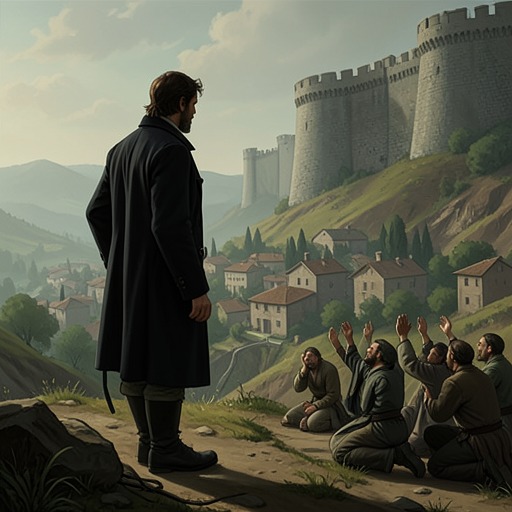
In [Altdorf](entity:location-recall-location-a6f0a606f1a7), laborers are driven to build a fortress intended to keep the people under control. Workers recognize that the stronghold is being raised against them, and Tell observes that human hands can also undo what human hands have built.
during the same day
The Hat Is Raised
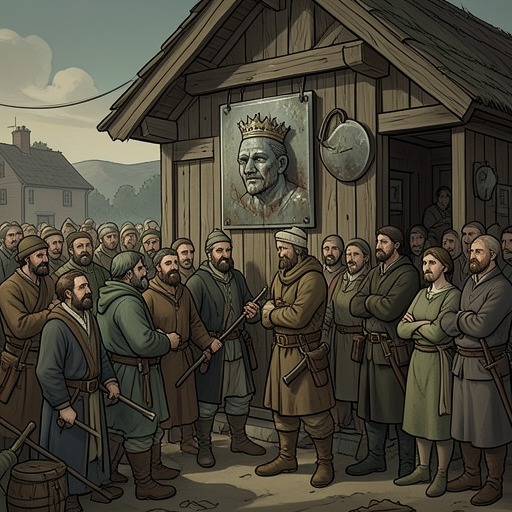
A crier announces that [Hermann Gessler](entity:character-recall-character-hermann-gessler-0529a7785215) has ordered a hat set on a pole in the market square. Everyone must bow before it as a sign of loyalty; refusal will cost a person life and property.
after the decree
Tell Refuses the Council
[Werner Stauffacher](entity:character-recall-character-werner-stauffacher-52875fcb6d24) asks [Wilhelm Tell](entity:character-recall-character-wilhelm-tell-1631a4b5f973) to join the cause against the governors. Tell argues for quiet endurance and says that he was not born to deliberate in councils, though he promises to act when the course is settled and his country calls.
before the secret gathering
Melchthal’s Father Is Blinded
Arnold of [Melchthal](entity:character-recall-character-melchthal-1517149bca73) explains that he fled after striking an official who tried to take his oxen. To punish him, the governor Landenberg demanded that his father produce him; when the old man could not, Landenberg had his eyes put out.
after the blinding is reported
The Three Leaders Confer
[Werner Stauffacher](entity:character-recall-character-werner-stauffacher-52875fcb6d24) meets [Walter Furst](entity:character-recall-character-walter-furst-92ef50e844ff) and Arnold of [Melchthal](entity:character-recall-character-melchthal-1517149bca73) in [Uri](entity:location-recall-location-uri-a0a3942f18f9). They weigh the danger of open conflict, agree that oppression has gone beyond endurance, and decide to seek support across all three cantons.
that night
A Meeting at Rütli
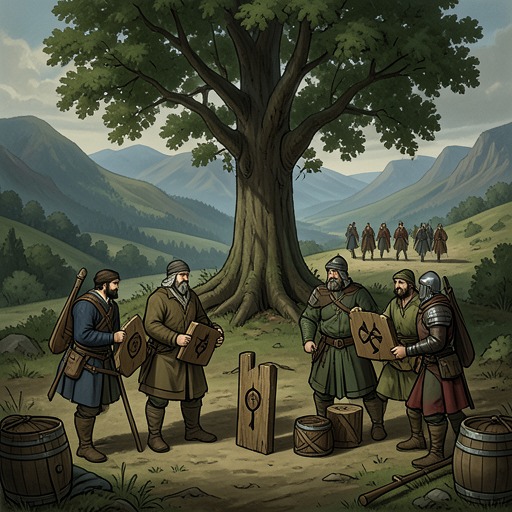
[Walter Furst](entity:character-recall-character-walter-furst-92ef50e844ff) proposes a secret meeting at [Rütli Meadow](entity:location-recall-location-efad7ba57d8a), where the borders of the cantons meet. Each leader is to bring ten trustworthy men so they can deliberate without alerting the governors’ spies.
at the midnight gathering
Melchthal Finds Support
Arnold of [Melchthal](entity:character-recall-character-melchthal-1517149bca73) recounts traveling through remote mountain settlements and finding people ready to resist the governors. News of his father’s treatment has spread, and household after household has offered him welcome and pledged support for a common cause.
during the Rütli council
The Old Swiss Bond
[Werner Stauffacher](entity:character-recall-character-werner-stauffacher-52875fcb6d24) recalls the traditional account of how the three communities settled the mountain valleys and maintained a shared identity across their separate borders. He argues that the people’s ancient self-government and customary rights give them grounds to resist a foreign ruler’s encroachments.
during the same council
A Law Against Submission
When the priest raises the possibility of ending the conflict by swearing allegiance to Austria, the assembled men reject the proposal with anger. They make it a rule that anyone advocating submission will forfeit the rights and honors of a Swiss, and the assembly adopts the law.
later in the Rütli council
The Plan for the Strongholds
The confederates debate whether to act at once or wait for a moment when they can surprise the garrisons. They settle on a coordinated plan to seize the fortresses at Rossberg and [Sarnen](entity:location-recall-location-c747d498daf2), then raise signals across the mountains and demand that the foreign officials leave without unnecessary bloodshed.
at dawn after the council
The Rütli Oath
As daylight reaches the mountains, the assembled men swear to stand together in danger and death, remain free as their fathers were, and trust in God rather than human power. They part in different directions, carrying a secret alliance that is meant to mature before the planned rising.
after the Rütli gathering
Rudenz and Attinghausen Clash
At the mansion of [Werner, Baron of Attinghausen](entity:character-recall-character-werner-baron-of-att-f18ea7d8f3c0), [Ulrich von Rudenz](entity:character-recall-character-ulrich-von-rudenz-32a354d77f4b) appears dressed for court and eager to leave for [Altdorf](entity:location-recall-location-a6f0a606f1a7). His uncle condemns his contempt for local customs and his willingness to seek favor from the same power oppressing his countrymen.
shortly afterward
Bertha Challenges Rudenz
In the forest, [Bertha of Bruneck](entity:character-recall-character-bertha-of-bruneck-f6b14f3e291d) tells [Ulrich von Rudenz](entity:character-recall-character-ulrich-von-rudenz-32a354d77f4b) that his service to Austria makes him a deserter of his people. She urges him to stand with the oppressed and explains that her own estates and freedom are threatened by the rulers’ ambitions.
at the end of their meeting
Rudenz Chooses His Country
Moved by [Bertha](entity:character-recall-character-bertha-24f3f5473c9c)’s appeal, [Rudenz](entity:character-recall-character-rudenz-12f5b9d022c6) recognizes that his longing for courtly glory has blinded him to his duty. He pledges himself to his native land, while Bertha makes clear that she loves the man who will protect its freedom.
before Tell’s journey to Altdorf
Hedwig Fears for Tell
At home, [Hedwig](entity:character-recall-character-hedwig-d5573b4ec33a) worries that [Wilhelm Tell](entity:character-recall-character-wilhelm-tell-1631a4b5f973)’s dangerous hunting and readiness to help others will one day leave his family without him. Tell insists that courage and trust in God are necessary, and sets out with [Walter Tell](entity:character-recall-character-walter-tell-f4a4f0b0dc27) despite Hedwig’s unease about the governor’s presence in [Altdorf](entity:location-recall-location-a6f0a606f1a7).
on the road to Altdorf
A Warning About the Lowlands
Walking with [Walter Tell](entity:character-recall-character-walter-tell-f4a4f0b0dc27), [Wilhelm Tell](entity:character-recall-character-wilhelm-tell-1631a4b5f973) describes the fertile lowlands beyond the mountains, where kings and bishops claim the land, game, and waters. The boy says he would rather live among avalanches than among people who cannot trust one another, and Tell agrees that mountain dangers are preferable to malicious rule.
that day in Altdorf
Tell Passes the Hat
[Wilhelm Tell](entity:character-recall-character-wilhelm-tell-1631a4b5f973) and [Walter Tell](entity:character-recall-character-walter-tell-f4a4f0b0dc27) pass the hat without saluting it. The guards stop Tell and accuse him of defying the governor’s order; the crowd gathers, and [Walter Furst](entity:character-recall-character-walter-furst-92ef50e844ff) and other countrymen try to prevent the arrest.
during the confrontation in Altdorf
Gessler Orders the Apple Shot
[Hermann Gessler](entity:character-recall-character-hermann-gessler-0529a7785215) turns Tell’s reputation as an archer into a test of obedience. He commands Tell to shoot an apple from [Walter Tell](entity:character-recall-character-walter-tell-f4a4f0b0dc27)’s head, warning that a miss will cost Tell his life; pleas from the onlookers and [Bertha](entity:character-recall-character-bertha-24f3f5473c9c) do not move him.
moments later
Tell Shoots the Apple
With [Walter Tell](entity:character-recall-character-walter-tell-f4a4f0b0dc27) standing beneath the tree and insisting that he is not afraid, [Wilhelm Tell](entity:character-recall-character-wilhelm-tell-1631a4b5f973) steadies himself and releases the arrow. It strikes the apple cleanly, and the boy runs to his father unharmed as the crowd recoils from the ordeal’s danger.
immediately after the shot
The Second Arrow Revealed
[Hermann Gessler](entity:character-recall-character-hermann-gessler-0529a7785215) notices that Tell had placed a second arrow in his belt and demands an explanation. Tell admits that if the first arrow had killed his son, the second would have been aimed at Gessler; the governor keeps his promise not to kill Tell directly but orders him bound and taken to prison.
later that day
Tell Is Taken by Ship
Bound and under guard, [Wilhelm Tell](entity:character-recall-character-wilhelm-tell-1631a4b5f973) is taken aboard [Hermann Gessler](entity:character-recall-character-hermann-gessler-0529a7785215)’s ship for transport to [Küssnacht](entity:location-recall-location-ceffa3784fb6). The voyage begins as a violent storm builds over the lake, making the governor’s prisoners and escorts vulnerable to the elements.
during the storm
Tell Escapes the Ship
When the storm threatens to wreck the vessel, the crew persuades Gessler to release Tell so that he can steer. Tell guides the ship toward a rocky ledge, leaps ashore with his weapons, and pushes the boat back into the raging water, escaping his captors.
after reaching shore
Tell Takes the Road to Küssnacht
Once safe on land, Tell learns that Gessler intends to travel by way of [Schwyz](entity:location-recall-location-schwyz-b1d16b79a36b) to his castle. Tell sends word to his family and the confederates that he is free, then asks for the shortest route to [Küssnacht](entity:location-recall-location-ceffa3784fb6) and leaves with a purpose he does not disclose.
while Tell makes for Küssnacht
Attinghausen Dies
At [Attinghausen](entity:location-recall-location-d84c4afb47e9), the aged baron lies dying among his friends and family. He learns that the three cantons have sworn to act together and takes comfort in the prospect that the people may preserve liberty after his own generation has passed.
at Attinghausen’s deathbed
Rudenz Joins the Confederates
[Rudenz](entity:character-recall-character-rudenz-12f5b9d022c6) arrives too late to speak to his uncle but learns that the dying baron blessed his defense of his country. He repudiates his former allegiance to the foreign court and asks the confederates to accept him as an ally.
at Attinghausen’s deathbed
Bertha’s Abduction
[Rudenz](entity:character-recall-character-rudenz-12f5b9d022c6) reports that [Bertha](entity:character-recall-character-bertha-24f3f5473c9c) has been carried off by the governor’s men, leaving him afraid she will be forced into a marriage. Her disappearance gives the struggle a new personal urgency and convinces the confederates that the existing timetable may no longer be safe.
shortly after Bertha’s abduction
The Rising Is Advanced
The leaders had sworn to wait until [Christmas](entity:time-recall-time-christmas-a573265d0167) before seizing the strongholds, but [Rudenz](entity:character-recall-character-rudenz-12f5b9d022c6) argues that circumstances have changed and that Tell’s arrest has already shown the cost of delay. Arnold of [Melchthal](entity:character-recall-character-melchthal-1517149bca73) and the others agree to act sooner, and Rudenz undertakes to lead the attack at [Sarnen](entity:location-recall-location-c747d498daf2).
as Gessler approaches Küssnacht
Tell Waits in the Pass
In a narrow pass, [Wilhelm Tell](entity:character-recall-character-wilhelm-tell-1631a4b5f973) conceals himself where the road leaves Gessler no easy way to evade him. He reflects on the second arrow he had prepared at [Altdorf](entity:location-recall-location-a6f0a606f1a7) and on the vow he made there: if forced to aim at his child, he would next aim at the governor.
moments before Gessler arrives
Armgart Pleads for Justice
[Armgart](entity:character-recall-character-armgart-79784bc9cc11) blocks the pass with her children and begs Gessler to free her husband, imprisoned without a hearing. She refuses to move even when threatened, placing herself and the children in his path and exposing how powerless the governor’s victims have been.
during Armgart’s appeal
Gessler Declares His Purpose
Gessler admits that he raised the hat not to discover what the people already felt but to teach them to bow. He says that the ruling house intends to extend its power and that the small mountain communities must be subjected, making his deliberate policy of domination unmistakable.
at the pass near Küssnacht
Gessler Is Shot
As Gessler threatens to crush the people’s spirit, Tell’s arrow strikes him in the heart. From above, Tell acknowledges the shot and declares that the cottages are free of the governor’s threat; Gessler dies as the wedding party and local people gather around him.
immediately after Gessler’s death
The People Claim Their Freedom
Gessler’s followers call for the murderer to be pursued, but the people refuse further violence and declare themselves free. The death of the governor changes the balance of power, and his armed servants withdraw to protect the remaining stronghold.
that night and the following hours
The Strongholds Fall
The confederates carry out their coordinated attacks on the governors’ strongholds. Arnold of [Melchthal](entity:character-recall-character-melchthal-1517149bca73) takes Rossberg, while [Rudenz](entity:character-recall-character-rudenz-12f5b9d022c6) leads the seizure of [Sarnen](entity:location-recall-location-c747d498daf2); across the cantons, the governors’ men are driven from their positions.
during the assault on Sarnen
Bertha Is Rescued
As the stronghold burns, the confederates hear that [Bertha](entity:character-recall-character-bertha-24f3f5473c9c) is trapped inside. [Rudenz](entity:character-recall-character-rudenz-12f5b9d022c6) and Arnold of [Melchthal](entity:character-recall-character-melchthal-1517149bca73) rush through the flames and carry her out, risking their lives as the timbers collapse around them.
during the expulsion of the governors
Melchthal Spares Landenberg
Arnold of [Melchthal](entity:character-recall-character-melchthal-1517149bca73) overtakes Landenberg, the man responsible for blinding his father, and brings him before the blind old man. At his father’s appeal, Melchthal spares the governor’s life after Landenberg swears never to return with hostile intent.
at daybreak after the rising
The Uri Keep Is Torn Down
The people of [Uri](entity:location-recall-location-uri-a0a3942f18f9) see signal fires burning across the mountains and hear the bells announcing the uprising’s success. Unable to wait for further news, they rush to demolish the keep and its scaffold, destroying the building that had been intended to hold them in submission.
during the destruction of the keep
The Hat Becomes a Memorial
The people bring down the hat that they had been ordered to salute and ask what should be done with it. [Walter Furst](entity:character-recall-character-walter-furst-92ef50e844ff) refuses to destroy it, proposing instead that the former instrument of despotism remain as a lasting sign of the freedom won.
the morning after the rising
The Confederates Celebrate Victory
Arnold of [Melchthal](entity:character-recall-character-melchthal-1517149bca73) confirms that the foreign officials have been driven out, while the people celebrate amid the ruins of the keep. [Walter Furst](entity:character-recall-character-walter-furst-92ef50e844ff) cautions that the king may send an army to restore his authority, but the confederates answer that their union will let them defend the passes.
news arriving after the cantons’ revolt
Albert I Is Assassinated
[Werner Stauffacher](entity:character-recall-character-werner-stauffacher-52875fcb6d24) brings word that [Albert I](entity:character-recall-character-albert-i-1d895a641fd2) has been murdered near [Bruck](entity:location-recall-location-9dbfb43ae54f). The killers include [Duke John](entity:character-recall-character-ea6d62b3ad9b), the emperor’s nephew, who struck after Albert withheld his inheritance; the news means the confederates’ most powerful feared opponent is gone, though the murder threatens a violent response.
soon after news of Albert I’s death
The Queen Demands the Assassins
A royal letter asks the cantons to reject the emperor’s killers and help deliver them to the queen’s vengeance. [Stauffacher](entity:character-recall-character-stauffacher-21ead3bf4be8) and [Walter Furst](entity:character-recall-character-walter-furst-92ef50e844ff) refuse to hunt men who have not harmed them, arguing that Albert gave the cantons neither justice nor protection and that his death releases them from enforced loyalty.
after the cantons’ liberation
Tell Returns to His Family
At home, [Hedwig](entity:character-recall-character-hedwig-d5573b4ec33a) and her sons wait for [Wilhelm Tell](entity:character-recall-character-wilhelm-tell-1631a4b5f973), having heard that he is alive and free. Tell returns and embraces them, assuring Hedwig that no governor will again divide their family; he says he will never use his crossbow for hunting again.
during the family reunion
Duke John Seeks Shelter
A disguised man enters Tell’s house and asks whether Tell is the man who killed the governor. He reveals that he too has killed a ruler who denied him justice, and Tell recognizes him as [Duke John](entity:character-recall-character-ea6d62b3ad9b), fugitive after murdering [Albert I](entity:character-recall-character-albert-i-1d895a641fd2).
during Duke John’s confession
Tell Rejects the Comparison
[Duke John](entity:character-recall-character-ea6d62b3ad9b) compares his killing of Albert with Tell’s killing of Gessler. Tell rejects the comparison: he acted under the immediate threat to his child and household, while Duke John killed for ambition and revenge, making the moral difference between defense and murder central to their encounter.
before the gathering at Tell’s home
Tell Sends Duke John Toward Rome
Although Tell condemns the murder, he pities [Duke John](entity:character-recall-character-ea6d62b3ad9b)’s despair and promises to help him as a fellow human being. He directs the fugitive toward [Italy](entity:location-recall-location-italy-85c2492cd54b) and [Rome](entity:location-recall-location-rome-3ec0a741c1f4), where he can confess his crime to the pope, and sends him away before the celebrating confederates arrive.
at the final gathering
Bertha Joins the Confederates
The people assemble at Tell’s home and hail him as their liberator. [Bertha](entity:character-recall-character-bertha-24f3f5473c9c) asks to enter their league and entrusts her rights to the community; the confederates promise to protect her, and she gives her hand to [Rudenz](entity:character-recall-character-rudenz-12f5b9d022c6) as a free Swiss woman to a free Swiss man.
at the conclusion
Rudenz Frees His Serfs
[Rudenz](entity:character-recall-character-rudenz-12f5b9d022c6) declares that all the serfs on his lands are free. His decision turns the victory over the governors into a change within his own household and completes his rejection of the social hierarchy he once sought to preserve.